
Springtime bolstering 'bloom
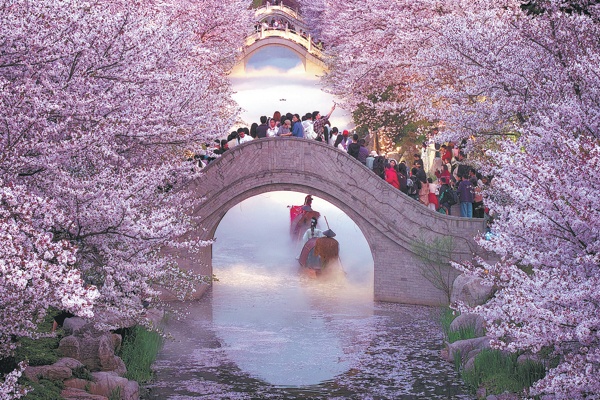
Blooming cherry blossoms attract tourists in Nantong,邓州市骨伤医院新闻网 Jiangsu province during the Qingming Festival holiday. XINHUA
As spring arrives in the capital, a sense of fear of missing out on natural beauty grips residents eager to catch fleeting blooming flora.
From early March, mountain peach blossoms mark the start of the season, followed by magnolia, crab apple and lilac in quick succession, turning seasonal flora viewing into a tightly timed ritual.
At Sanlihe Park near Beijing's Qianmen area, mountain peach blossoms line the riverbanks, drawing crowds to nearby cafes to sip hot drinks while taking in the panoramic views. Long queues are common, with customers placing orders well in advance, while riverside seating beneath the blossoms remains highly sought after.
The scenes reflect the rapid rise of China's "flower-viewing economy", where seasonal sightseeing is expanding into a broader consumption ecosystem spanning catering, tourism and leisure activities.
Data point to strong sustained demand. Online travel agency Trip.com said bookings for flower-related tourism products in March rose 65 percent year-on-year, with cross-provincial travel accounting for more than 70 percent. Similarly, a report by Guangzhou, Guangdong province-based GZL International Travel Service showed that flower viewing now makes up nearly half of the domestic spring tourism market.
UTour, a major Beijing-based travel agency, said females accounted for more than 60 percent of travelers between March and May, prompting companies to expand product offerings and promotions targeting the "she-conomy".
The trend aligns with policy efforts to foster new consumption scenarios and boost domestic demand. The 2026 Government Work Report called for cultivating new consumption drivers and building high-visibility consumption scenarios.
The broader experience economy is expanding rapidly. According to a recent report on China's experience economy development, the market reached 18.4 trillion yuan ($2.68 trillion) as of November 2025, up 22.6 percent year-on-year, outpacing the global average by 7.4 percentage points.
Wei Xiang, a researcher at the National Academy of Economic Strategy under the Chinese Academy of Social Sciences, said the spring "bloom-boom" reflects a broader shift in consumer preferences.
"The heat of the spring economy is essentially a concentrated projection of consumption upgrades across a seasonal dimension. Demand is moving from simple sightseeing to immersive experiences, and from short-term spikes to longer-term engagement," Wei said, adding that rising interest in a sense of ritual, wellness and emotional value is reshaping consumption patterns.
He said that by creatively integrating flower viewing with camping and markets, local governments are successfully expanding and prolonging the consumption chain.
In some destinations, that shift is already translating into tangible growth.
In Wuyuan, Jiangxi province, visitor numbers during the rapeseed flower season are expected to rise by more than 15 percent year-on-year, with hotel occupancy rates more than 85 percent, said local authorities. Some areas have reported tourism-related revenue growth exceeding 50 percent, driven by integrated offerings.
In Wuhan, Hubei province, authorities have rolled out more than 300 activities spanning culture, sports, commerce and tourism during the cherry blossom season, alongside partnerships with companies including Starbucks, Alipay and Didi to integrate dining, transport and retail sectors into visitor experiences. More than 4,200 restaurants are participating in themed promotions.
However, the boom also exposes structural challenges.
The China Tourism Academy said more than 80 percent of flower-viewing destinations have profit windows of less than one month, highlighting constraints including strong seasonality and product homogeneity.
Wu Liyun, a professor at the China Academy of Culture and Tourism at Beijing International Studies University, said that while integrated "flower viewing plus" models are gaining traction, sustaining demand beyond peak bloom periods remains a challenge.
"Relying solely on short blooming periods is not sustainable. The key is to integrate flower viewing with other sectors and develop related products to stabilize demand," Wu said.
相关文章
 视频丨春运期间带娃出行 这份防走失指南请收好
 今晚“元宵红月”要来了!看看你那里的天气是否适宜观赏
 百年老字号上新潮玩挂件 新品类年货圈粉年轻人
 【国际宣传片】这束光,温暖每一个平凡的人生
 新春走军营丨他25岁的生命,即将步入第86个春天
 两会早知道丨全国政协十四届四次会议今日15时开幕 首场“委员通道”14时开启
 武汉嘉信物业将民俗表演引入社区 业主家门口“闹”元宵
 迎接新学期 各地中小学特色活动点亮“开学第一课”
 聚焦“三新”试点、推动“微短剧+”!一组关键词读懂“服务消费”这件事
 两会深观察|2026全国两会,意义格外不同
 【“中国游记”第二季㉒】甘肃:沙漠狂欢 秒变“神仙” 整的就是浪漫“花活儿”
 防范“发票陷阱” 当心邮箱暗藏窃密风险